



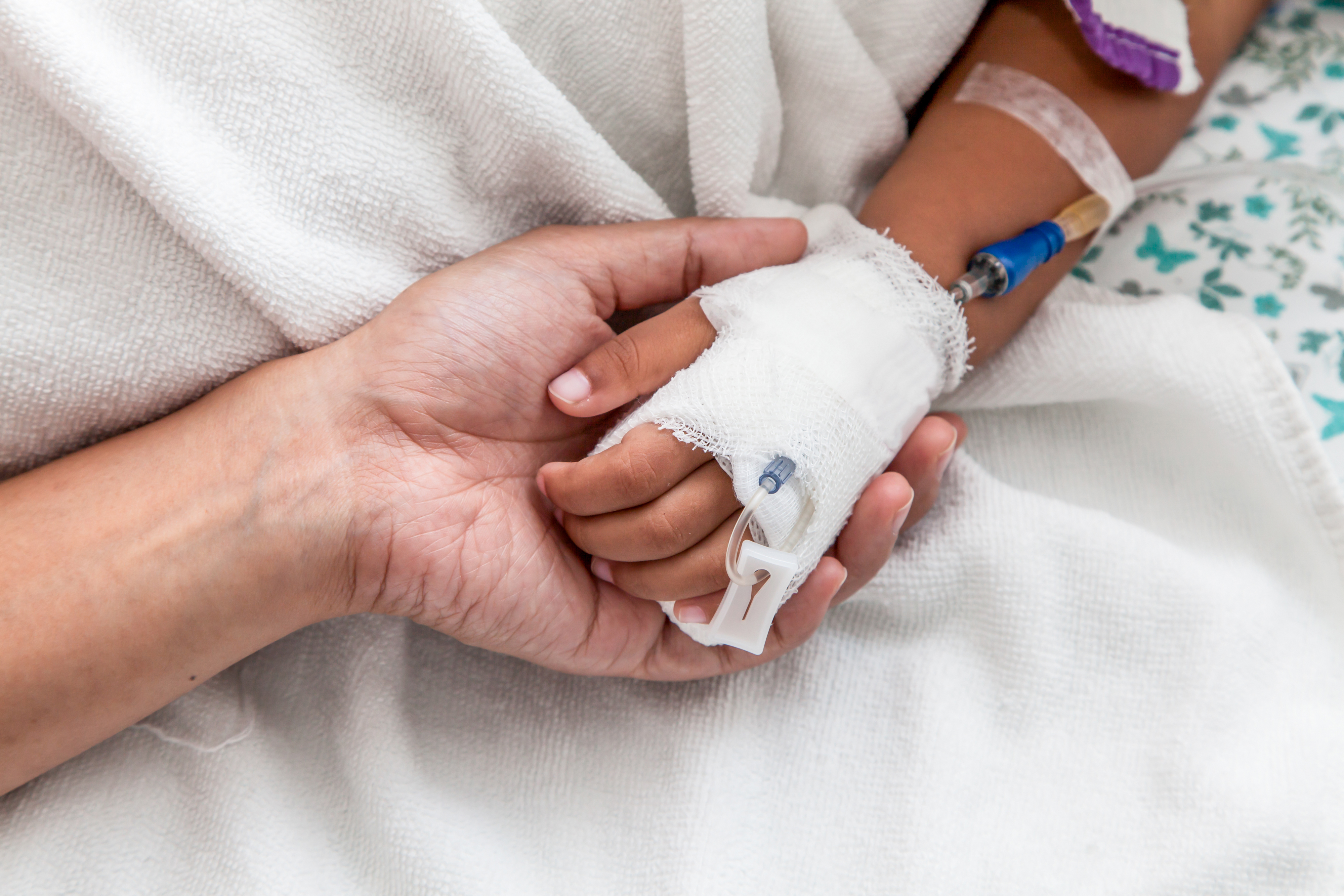
Hearing that your child needs infusion therapy lands differently than any diagnosis of your own. The questions come fast: will it hurt, how do I explain it, can I hold them, how do we do this every few weeks without it taking over childhood? Take a breath. Thousands of children receive infusion therapy for conditions like primary immunodeficiency, juvenile arthritis, Crohn’s disease, and other autoimmune and neurological conditions, and for most families, treatment day becomes a manageable, even boring, part of the routine within a few visits. This guide covers what pediatric infusions involve, how to prepare a child at every age, the comfort techniques that genuinely work, and how home infusion changes the equation for many families.
| KEY TAKEAWAY — What experienced infusion families know The first infusion is the hardest, for parents more than kids. With numbing cream, good distraction, a pediatric-experienced nurse, and honest age-appropriate preparation, most children adapt remarkably fast. Your calm is the most powerful comfort tool in the room. |
Why Children Receive Infusion Therapy
Pediatric infusion therapy serves many of the same purposes as adult therapy: delivering medications that can’t be taken by mouth, at doses and formulations pills can’t match. Common scenarios include immunoglobulin therapy (IVIG or subcutaneous SCIG) for primary immunodeficiency, biologic infusions for juvenile idiopathic arthritis and pediatric IBD, IVIG for certain neurological and inflammatory conditions, and enzyme replacement therapies for rare diseases. Your child’s specific medication, dose, and schedule come from their specialist; our role is making the delivery of that plan as smooth, safe, and low-stress as possible.
Preparing Your Child, Age by Age
Toddlers and preschoolers (roughly 1–5)
- Keep explanations short, concrete, and same-day: “A nurse is going to help your arm get medicine that keeps you strong. You can watch your show the whole time.”
- Avoid promising “it won’t hurt.” Promise what’s true: “It might pinch for a second, and I’ll be holding you.”
- Comfort positioning (child seated on your lap, hugged front-to-front) beats lying a child down and holding them still, and pediatric nurses will help you set it up.
School-age kids (roughly 6–12)
- Explain a few days ahead, honestly and simply, and let them ask everything. Kids this age handle known things far better than surprises.
- Give them jobs and choices: which arm, which show, whether they want to watch the IV placement or look away. Control reduces fear.
- Consider a practice run: touring the infusion center, meeting the nurse, seeing the recliner and the snack situation before treatment day.
Teens
- Talk with them, not about them. Teens do best when they’re treated as the lead patient, with you as support staff.
- Protect their normal: schedule around school, sports, and social events wherever possible, and ask us to help make that happen.
- Watch for quiet worries: body image with ports, missing school, feeling different. Naming these directly usually helps more than avoiding them.
The Comfort Toolkit: What Actually Works
- Numbing cream, every time. Topical numbing agents applied before needle placement remove most of the pain from IV starts and port access. Ask for it as standard, not as an exception; for kids, it should be.
- Distraction, matched to the kid. Tablets and headphones are the workhorses, but bubbles for littles, a new small toy revealed at needle time, or a parent narrating a story all outperform “hold still, almost done.”
- Comfort positioning. Upright, held, and hugged beats pinned down, every time. Restraint escalates fear and makes the next visit harder; positioning builds trust.
- Honesty in kid-sized pieces. Never lie about a pinch, never spring a surprise. A child who learns that your treatment-day words are reliable brings less fear to every future visit.
- Celebrate finish lines. A post-infusion ritual (milkshake stop, sticker chart, choosing dinner) gives the day a shape that ends well. Small, consistent, theirs.
| PRO TIP — Pack the infusion bag together Let your child own a special bag that only comes out on treatment days: favorite blanket, headphones, a comfort item, snacks, chargers, and one small surprise. Packing it together the night before turns dread into preparation, and gives anxious kids a sense of control. |
Home Infusion for Children: When Treatment Comes to Them
For many pediatric therapies, home infusion is a genuine option, and for kids it can be transformative. Familiar surroundings lower anxiety dramatically: their couch, their dog, their shows, no waiting room of unfamiliar faces. School disruption shrinks because there’s no travel time, and siblings’ schedules stop revolving around treatment logistics. Safety is preserved: a pediatric-experienced infusion nurse administers and monitors the entire visit with the same protocols and emergency preparedness used in-center, typically after first doses are completed under supervised conditions. Whether home infusion fits your child depends on the medication, their reaction history, and your prescriber’s judgment; it’s a conversation we’re glad to facilitate.
| IMPORTANT — When to call after any pediatric infusion Call your care team promptly for fever over 100.4°F, rash or hives, unusual sleepiness or irritability, vomiting, headache that doesn’t respond to your approved comfort measures, or anything that just seems wrong to you. Parental instinct is real clinical data; we take “something’s off” seriously, and our pharmacists answer 24/7. For breathing difficulty or facial swelling, call 911 first. |
| Pediatric infusion, done gently Our infusion nurses bring pediatric experience, patience, and a numbing-cream-first philosophy to every child’s care, at home or in our centers. Parents stay beside their child the entire time, always. ▸ Call (760) 340-3248 to talk through your child’s infusion plan |
Practical Logistics for Parents
- School coordination: ask about a 504 plan if treatment or condition affects attendance; infusion schedules and recovery days are exactly what 504 accommodations exist for. We can provide documentation.
- Your own time off: FMLA covers caring for a child with a serious health condition, including intermittent leave for treatment days. See our full FMLA guide for the setup steps.
- Insurance and cost: pediatric specialty therapies go through the same prior authorization and financial assistance pathways as adult ones, and our benefits team handles that work for your family, including foundation programs specific to pediatric conditions.
- The sibling factor: brothers and sisters notice everything. Small inclusion gestures (letting a sibling pack a snack for the bag, or a treat for both kids after infusion day) go further than you’d think.
| FROM OUR TEAM To the parent reading this at midnight before a first infusion: the fear you’re carrying right now is heavier than anything your child will feel tomorrow. We’ve watched hundreds of kids go from terrified to bored-and-snacking within three visits. Yours will get there too, and we’ll be beside both of you the whole way. |
Frequently Asked Questions
Q: Can I stay with my child during the entire infusion?
Yes, always. Whether at home or in our centers, a parent or guardian stays with the child throughout. For comfort positioning during IV placement, you’re not just allowed to be there; you’re part of the technique.
Q: How do I explain infusion therapy to a young child?
Short, concrete, honest, and close to the event: medicine that helps their body, delivered through a tiny straw in the arm, while they watch shows with you right there. Skip scary vocabulary, never promise zero pinch, and answer questions plainly. Your calm tone teaches them more than your words.
Q: Is home infusion safe for children?
For appropriate therapies and after initial supervised doses, yes: home pediatric infusion uses the same trained nursing, monitoring, and emergency protocols as in-center care. Eligibility depends on the medication and your child’s history, decided with your prescriber.
Q: What if my child is terrified of needles?
Needle fear is common and workable: numbing cream every time, comfort positioning instead of restraint, distraction matched to their age, and consistency across visits. For significant needle phobia, ask about child life strategies and gradual exposure; many severely fearful kids become veterans within a handful of visits.
Q: Will infusion therapy disrupt school?
Less than you fear. Between flexible scheduling (afternoons, school breaks), home infusion options, and 504 plan accommodations, most families keep school disruption minimal. Tell us the school schedule; we build around it.
| Your child’s care team, extended From prior authorization to pediatric-experienced nurses to a pharmacist who answers at 2 a.m., River’s Edge treats your child’s therapy as a family matter. Because it is one. ▸ repharmacy.com • (760) 340-3248 |