



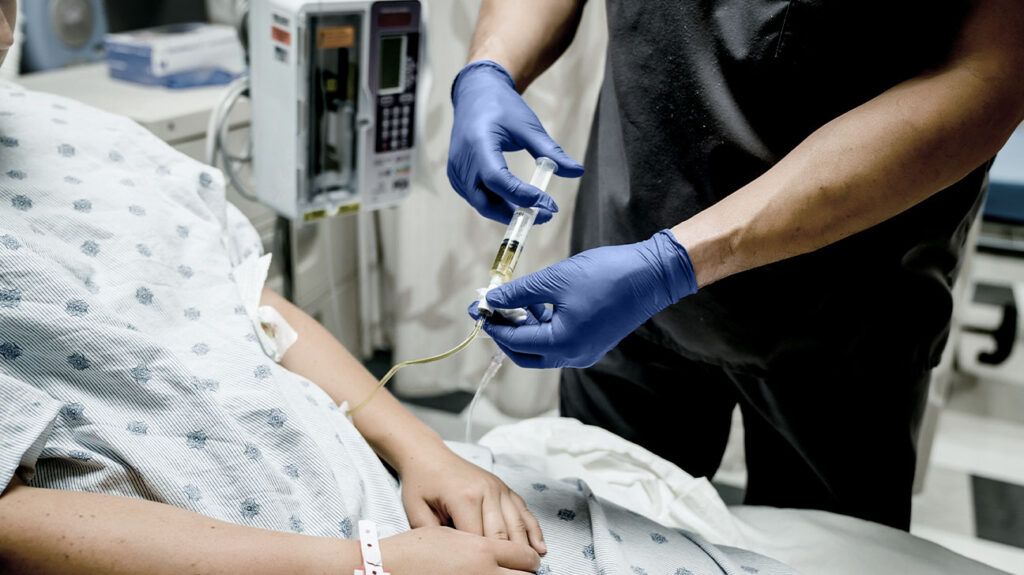
If you’ve just been prescribed infusion therapy, there’s a good chance someone (your doctor, a pamphlet, or a late-night search) mentioned the phrase “infusion reaction.” And there’s an equally good chance it made your stomach drop a little. Let’s take the fear out of it. Infusion reactions are well understood, usually mild, largely preventable, and always something your infusion team is trained to catch early and manage quickly. This guide walks you through what reactions actually feel like, why they happen, who’s most at risk, and exactly what happens if one occurs, whether you’re in one of our infusion centers or receiving therapy at home.
| KEY TAKEAWAY — The big picture Most infusion reactions are mild, happen during the first one or two infusions, and resolve quickly when the infusion is slowed or paused. Severe reactions are rare, and infusion nurses are specifically trained to recognize and treat them within minutes. |
What Is an Infusion Reaction?
An infusion reaction is your body’s response to receiving a medication intravenously. It can range from a flushed face or mild chills to, rarely, a true allergic response. Reactions fall into two broad categories, and knowing the difference helps you understand what your nurse is watching for.
Standard infusion-related reactions
These are the most common type. They happen because your immune system notices the medication (especially biologics, which are large protein molecules) and responds with symptoms like flushing, chills, mild fever, headache, muscle aches, or nausea. They’re typically related to the infusion rate: the faster the drug goes in, the more likely your body is to react. That’s why first infusions are run slowly and why slowing the rate often resolves symptoms on its own.
Hypersensitivity (allergic-type) reactions
Less common, these involve the immune system’s allergic machinery. Symptoms can include hives, itching, swelling of the lips or throat, wheezing, chest tightness, or a sudden drop in blood pressure. True anaphylaxis is rare, but it’s the reason infusion suites stock emergency medications and why every infusion nurse maintains certification in emergency response. Your care team isn’t expecting trouble; they’re simply ready for it.
What Does a Reaction Actually Feel Like?
Patients often describe early reaction symptoms as “coming on like a wave.” Here’s the symptom ladder your nurse uses, roughly from most to least common:
| Severity | Common Symptoms | Typical Response |
|---|---|---|
| Mild | Flushing, warmth, mild headache, mild nausea, itchy skin at the IV site | Slow the infusion rate; symptoms usually fade within minutes |
| Moderate | Chills or rigors, fever, chest or back discomfort, widespread itching, hives | Pause the infusion, give supportive medications, restart slowly once resolved |
| Severe (rare) | Throat tightness, difficulty breathing, swelling of face or lips, dizziness from low blood pressure | Stop the infusion, administer emergency medications, escalate care immediately |
| IMPORTANT — Speak up earlyNever wait to see if a symptom passes. Tell your nurse the moment you feel anything unusual: warmth, itching, chest pressure, throat tickle, or a general sense that something is “off.” Early reporting is the single most effective safety tool in the infusion suite, and no symptom is too small to mention. |
Why Do Infusion Reactions Happen?
Several factors influence reaction risk, and understanding them explains a lot of what your care team does before and during your infusion:
- The medication itself. Biologic therapies like rituximab and infliximab carry higher first-dose reaction rates because they are large, complex proteins. Iron infusions and IVIG have their own well-characterized reaction profiles.
- First exposure. Most reactions occur during the first or second infusion, before your body has “met” the medication. Reaction risk typically drops with each subsequent dose.
- Infusion rate. Faster infusions raise reaction risk. This is why titration protocols start slow and increase gradually as you tolerate the drug.
- Hydration and overall health. Being well hydrated and rested measurably lowers the odds of infusion-day symptoms, particularly headache and fatigue.
- Skipped premedication. For medications with known reaction profiles, premedication is part of the protocol, and skipping it raises risk. Always tell your team if you didn’t take a prescribed pre-med.
How Your Care Team Prevents Reactions
Prevention starts long before the needle. Here’s the behind-the-scenes work that happens around every infusion at River’s Edge:
- Pharmacist clinical review. Before your first dose, our clinical pharmacists review your full medication list, allergy history, and prior infusion notes for interaction or reaction risks.
- Premedication protocols. Depending on the drug, you may receive acetaminophen, an antihistamine, or a corticosteroid 30 to 60 minutes before the infusion to blunt the most common reaction pathways.
- Slow titration. First infusions run at a deliberately slow rate that increases stepwise only as you tolerate it. This is why first appointments run longer than maintenance visits.
- Continuous monitoring. Your nurse checks vital signs before, during, and after the infusion, and stays within immediate reach the entire time, whether you’re in our center or at home.
- Post-infusion observation. Many protocols include a 15 to 60 minute observation window after the infusion ends, because some reactions appear as the drug finishes.
| Infusions with a safety net built in Every River’s Edge infusion, in our Irvine or Beverly Hills centers or in your own living room, is administered by an experienced infusion nurse with a clinical pharmacist on call 24/7. You’re never guessing alone. ▸ Call (760) 340-3248 or visit repharmacy.com to get started |
What Happens If You Have a Reaction
Here’s the step-by-step reality, which is far less dramatic than most patients fear. First, your nurse slows or pauses the infusion. For mild reactions, that alone often resolves symptoms within five to fifteen minutes. Second, supportive medications are given if needed: an antihistamine for itching or hives, acetaminophen for fever or chills, fluids for blood pressure support. Third, once symptoms fully resolve, the infusion is usually restarted at a slower rate, and most patients complete the full dose the same day. Your reaction is documented in detail so your next infusion can be adjusted proactively, often with added premedication or a modified rate.
Does a reaction mean I have to stop my medication?
Usually not. The majority of patients who experience a mild or moderate reaction go on to tolerate future infusions well, especially with protocol adjustments. Your prescriber makes the final call, informed by detailed notes from your infusion team. Only severe hypersensitivity reactions typically require switching therapies, and even then, your doctor and our pharmacists work together to find an alternative.
Reactions at Home: How Home Infusion Stays Safe
A common question: “If reactions can happen, is home infusion really safe?” Yes, and here’s why. Home infusion candidates are screened first; most patients receive their initial doses in a supervised setting before transitioning home. During home visits, your infusion nurse brings the same monitoring equipment and emergency medications used in our centers, follows the same protocols, and stays for the duration of your infusion plus the observation window. And our pharmacists are reachable 24/7 for anything that comes up between visits.
| PRO TIP — Your infusion-day checklist Hydrate well the day before and morning of. Eat a light meal beforehand. Take prescribed premedications on schedule. Wear comfortable layers (chills are easier to manage with a sweater handy). And write down anything unusual you felt after your last infusion so your nurse can adjust proactively. |
When to Call After You Get Home
Delayed reactions are uncommon but possible, typically within 24 to 48 hours. Call your care team promptly for: a rash or hives appearing after you’re home, fever over 100.4°F, joint pain or swelling, unusual fatigue that worsens instead of improving, or any breathing difficulty (for that, call 911 first). At River’s Edge, a clinical pharmacist answers 24/7. You will never reach a machine telling you to call back during business hours.
| FROM OUR TEAM Feeling nervous before a first infusion is completely normal. Our nurses have guided thousands of patients through that first appointment, and we consider it part of the job to answer every question, at whatever pace you need, until you feel ready. You are not a bother. You are the whole point. |
Frequently Asked Questions
Q: How common are infusion reactions?
It varies by medication. For many biologics, mild reactions occur in roughly 10 to 20 percent of first infusions and become far less common with subsequent doses. Severe reactions are rare, occurring in well under 1 percent of infusions for most therapies.
Q: Can I prevent an infusion reaction myself?
You can meaningfully lower your risk: hydrate well, take prescribed premedications exactly as directed, eat beforehand, and report every symptom early. Rate and protocol decisions are your care team’s job; preparation and communication are yours.
Q: What’s the difference between a side effect and a reaction?
A reaction happens during or shortly after the infusion and relates to the act of infusing the drug. Side effects are the medication’s broader effects on your body and can occur any time between doses. Both are worth reporting, but they’re managed differently.
Q: Will I react the same way every time?
Usually reactions lessen over time as your body adjusts. Your care team also adjusts premedication and infusion rates based on your history, which further reduces recurrence.
Q: Is it safe to drive home after an infusion?
For most maintenance infusions, yes. If you received sedating premedications like diphenhydramine, or if it’s your first dose of a new therapy, plan for a driver. Ask your nurse; they’ll give you a straight answer for your specific protocol.
| Questions before your first infusion? Call us and ask for a pharmacist. We’ll walk through your specific medication, your reaction risk profile, and exactly what your first appointment will look like. No rush, no jargon. ▸ Contact River’s Edge Specialty Pharmacy today • repharmacy.com |