



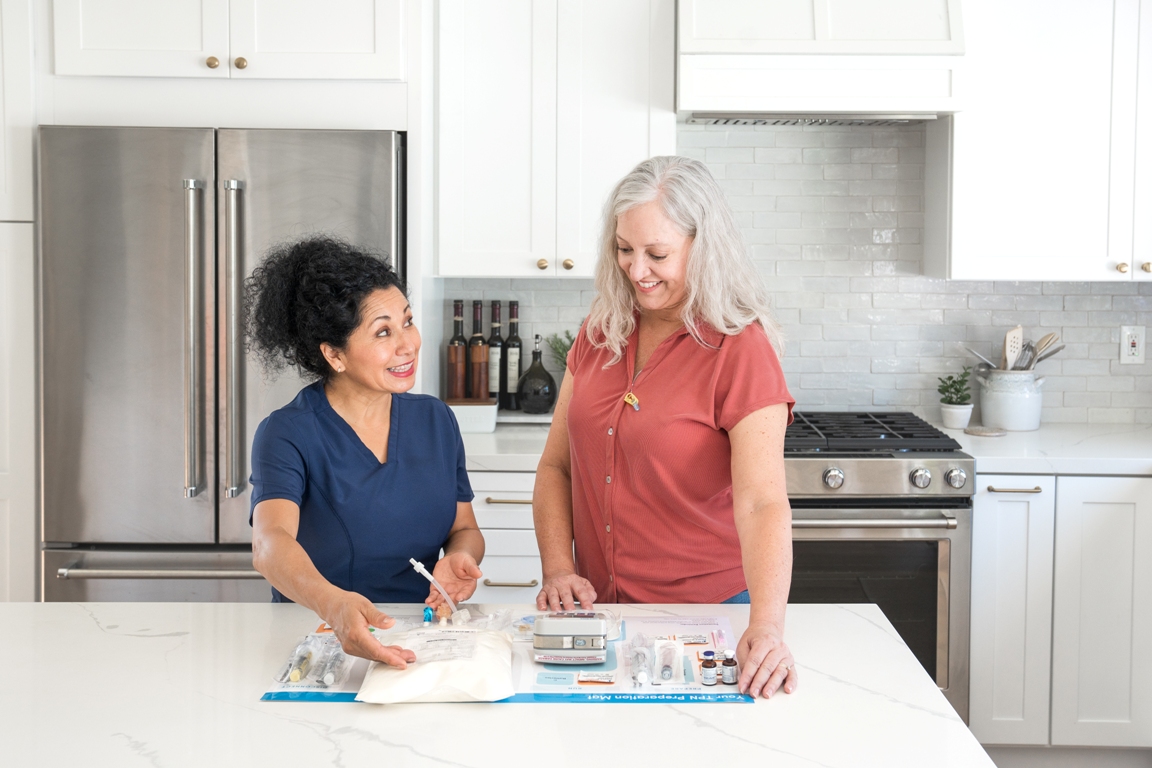
If you or someone you love has been told they need TPN at home, the conversation in the hospital probably went something like this: a nutrition team came to your bedside, talked about your gut not absorbing what you need, and explained that nutrition is going to come through a vein instead of by mouth. Then they used the words “central line,” “infusion pump,” and “discharge planning,” and the room started to feel small.
TPN — total parenteral nutrition — is one of the most life-saving therapies in modern medicine. It’s also one of the most intimidating to learn at home. Patients on TPN range from people recovering from surgery for a few weeks to people who will be on TPN for life. The variation is enormous, and so is the spectrum of “how much your daily life changes.”
This guide walks through what TPN is, what the home setup looks like, how central line care works, what the daily rhythm of TPN looks like (including sleeping through it, traveling on it, and yes, eating on it for some people), and what to do when something feels off. Most importantly, it covers what makes home TPN sustainable: the team behind you. You should not be doing this alone.
| Starting home TPN soon, or already living with it? Our nutrition support team coordinates compounding, delivery, central line supplies, and 24/7 clinical pharmacist availability. We’ve supported TPN patients for years and decades. ▶ Call (949) 555-0100 · Talk to Our Nutrition Team |
What Is TPN, Exactly?
TPN delivers complete nutrition — calories, protein, fat, vitamins, minerals, and trace elements — directly into your bloodstream through a central line. A central line is a long, thin catheter that ends in a large vein near the heart, allowing the concentrated TPN solution to be infused safely.
“Parenteral” means “outside the digestive tract.” That’s the key concept: TPN bypasses your gut entirely. It’s used when the gut can’t absorb enough nutrition, can’t be used safely, or needs prolonged rest to heal. Common reasons for TPN include:
- Short bowel syndrome after surgical removal of large portions of intestine
- Severe Crohn’s disease or other inflammatory conditions that prevent absorption
- Bowel obstruction or fistulas that make GI feeding impossible
- Severe malnutrition from cancer or its treatment
- Hyperemesis gravidarum (severe pregnancy nausea) in some cases
- Recovery from major abdominal surgery for a defined period
- Critical illness requiring nutritional support that can’t be delivered by mouth or feeding tube
TPN can be temporary (weeks to months for recovery) or long-term (years or for life, in cases of permanent intestinal failure). Your medical team will tell you what category you’re in, but it’s worth knowing that being on TPN doesn’t always mean being on TPN forever.
Central Lines: Your TPN Lifeline
TPN can’t be given through a regular IV in your arm — the solution is too concentrated and would damage smaller veins. You’ll have a central line placed before TPN starts. There are three main types you might see:
| Line Type | Where It Sits | Best For | Visible? |
|---|---|---|---|
| PICC line | Inserted in upper arm, threads to chest | Short to medium-term TPN (weeks to months) | Yes, dressing on arm |
| Tunneled catheter (Hickman, Broviac) | Tunneled under skin from chest to vein | Long-term TPN (months to years) | Partially, exits chest |
| Port-a-cath (Mediport) | Implanted under skin in upper chest | Intermittent or long-term, more discreet | Small bump under skin |
Each line type has tradeoffs. PICC lines are easiest to place and remove but limit certain activities (no swimming, careful showering). Tunneled catheters and ports are more durable for long-term use, swimmable in some cases, and less restrictive — but require minor surgical placement and removal.
| ⚠️ Central line infection: the most important risk to knowThe single most serious complication of TPN is a central line-associated bloodstream infection (CLABSI). Signs include: fever (especially within hours of starting an infusion), chills, redness or drainage at the line site, fatigue, body aches, or feeling ‘flu-ish’ that you can’t otherwise explain. CLABSI can become serious very quickly. If you have any of these symptoms, call your specialty pharmacy or care team immediately. We don’t wait until business hours for line concerns. |
What’s Actually in a TPN Bag
Your TPN bag is compounded specifically for you, based on a prescription from your prescribing physician (usually a nutrition specialist, GI doctor, or surgical team). Each bag contains:
- Dextrose (carbohydrate calories, your main energy source)
- Amino acids (protein for tissue maintenance and repair)
- Lipids (fat calories — sometimes mixed in the same bag, sometimes infused separately)
- Electrolytes (sodium, potassium, calcium, magnesium, phosphate, chloride — all customized to your labs)
- Trace elements (zinc, copper, manganese, selenium, chromium)
- Multivitamins (typically added daily)
- Insulin or other additives when clinically indicated
Your prescription is adjusted regularly — sometimes weekly during initial titration, then less often once you’re stable — based on lab work. Most TPN patients have weekly or biweekly labs to monitor electrolytes, liver function, and nutritional markers. Your specialty pharmacy works with your prescriber to update your TPN formula whenever needed.
| 💡 Why pharmacy compounding matters for TPN TPN is one of the most complex compounded products in pharmacy. Specialty pharmacies that compound TPN follow stringent USP <797> sterile compounding standards, with multiple checks at the formula calculation, mixing, and final-product stages. Not every pharmacy is set up for TPN compounding. Ask whether yours has a pharmacist board-certified in nutrition support (BCNSP) on staff. |
The Daily Rhythm: What Home TPN Actually Looks Like
Many newer patients are surprised to learn that home TPN is usually given at night while you sleep, a pattern called cyclic infusion. A typical schedule:
- Late afternoon. Take your TPN bag out of the refrigerator to warm to room temperature (usually 1-2 hours). Inspect for any cloudiness, particles, or color change.
- Evening. Add any final ingredients per your prescription (sometimes multivitamin, insulin, or other meds). Connect the bag to your tubing, prime the pump, and connect to your central line using sterile technique.
- Overnight. The pump runs for 10 to 14 hours typically. You can sleep, move around, use the bathroom, and live your life with the pump in a small backpack or on a stand near the bed.
- Morning. Disconnect, flush your line per your protocol, cap it off, and the line is hidden under your clothes for the day. Many patients have full active days while their gut rests.
- Throughout the day. Some patients eat normally (especially in short bowel syndrome with partial absorption), some eat for taste only, and some don’t eat by mouth at all. Your team will guide your specific approach.
There’s also continuous TPN, where the infusion runs 24/7. This is more common in early TPN initiation, in critically ill patients, or in patients who can’t tolerate the larger volumes that cyclic infusion requires. Most stable adult patients eventually move to cyclic overnight infusion because it gives you back your days.
| Need a specialty pharmacy that compounds TPN? Not all specialty pharmacies do TPN. We do — with board-certified nutrition support pharmacists, USP <797> compliant compounding, and weekly delivery on your schedule. ▶ Schedule a Consult · (949) 555-0100 |
Daily Life Questions Every TPN Patient Asks
Can I sleep while my TPN runs?
Yes. The pump runs quietly. Most patients sleep through the entire infusion. The tubing is long enough to allow rolling over and getting up if needed. The biggest adjustment is the first week or two — being aware of the pump while you sleep takes getting used to. After that, most people sleep normally.
Can I eat regular food on TPN?
It depends on your condition. Patients on TPN purely for short-term recovery may not eat by mouth at all. Patients with short bowel syndrome often eat normally, with TPN making up the calories and nutrients their gut can’t absorb. Patients with chronic motility issues may eat for pleasure (small amounts of food enjoyed for taste, with most calories coming from TPN). Your medical team will guide what’s safe and beneficial for you.
Can I shower with my central line?
Yes, with care. PICC lines need to be covered with a waterproof cover during showers. Tunneled catheters and ports are more flexible — many patients shower normally and just dry the site carefully afterward. Swimming and submerging is generally not recommended unless your specific line type and care team approve it.
Can I travel?
Yes, and many TPN patients travel extensively. Domestic travel requires planning: cooler with ice packs for the TPN bag, your supplies, your pump, and a letter from your prescriber for TSA. International travel is harder but possible — your specialty pharmacy can help coordinate shipments to a destination address, manage time zone changes, and prepare the documentation you’ll need at customs.
Can I work?
Most TPN patients on cyclic overnight infusion work full days normally. The pump and bag are in your closet at home, your line is hidden under clothes, and your day looks much like anyone else’s. Patients on continuous TPN have more visible adjustments but many still work, often with workplace accommodations.
Central Line Care: The Daily Habits That Keep You Safe
Most TPN complications are infection-related, and most infections trace back to line care. The basics are simple but absolutely non-negotiable:
- Wash your hands. Every time, before touching the line. Soap and water for 20 seconds, or use alcohol-based hand sanitizer if you’ve just washed.
- Use sterile technique. New gloves and supplies for each connection. Disinfect the cap or hub before connecting. Your home health nurse will train you in detail.
- Keep the dressing clean and dry. Change it on the schedule your nurse provides, usually weekly. Watch for redness, drainage, swelling, or warmth around the site.
- Flush per protocol. Saline and sometimes heparin flushes keep the line patent. Skipping flushes can cause clots or occlusions.
- Don’t use the line for anything else. Lab draws, IV medications, or other non-TPN uses should only happen with your prescriber’s specific approval.
- Cap it correctly when not in use. A clean, intact cap on the line at all times prevents bacteria entry.
| ✓ The line is the single most important thing to protect TPN patients live well for years with central lines, but a CLABSI can land you in the hospital and (in rare cases) be life-threatening. Five extra minutes of careful technique each day prevents the vast majority of line infections. This is the daily habit that matters most. |
Side Effects and Long-Term Considerations
Things to monitor in the short term
- Blood sugar fluctuations (especially when starting or stopping infusion) — your team may have you check finger sticks during transitions
- Electrolyte shifts — weakness, cramping, irregular heartbeat all warrant calling your team and checking labs
- Fluid overload — ankle swelling, shortness of breath, weight gain that doesn’t match calorie intake
- Refeeding syndrome (in malnourished patients starting TPN) — closely monitored during initiation
Things to monitor in the long term
- Liver function — prolonged TPN can cause TPN-associated liver disease; routine labs catch early signs
- Bone density — TPN patients have higher osteoporosis risk; monitor with DEXA scans every 1-2 years
- Trace element deficiencies or excesses — monitored with annual or semi-annual labs
- Catheter-related complications — including line malfunction, occlusion, breakage, or infection
How a Specialty Pharmacy Supports Home TPN
TPN is one of the most operationally complex therapies in specialty pharmacy. Doing it well requires sterile compounding capability, a board-certified nutrition support pharmacist, reliable cold-chain delivery, and tight coordination with your medical team. What we do for our TPN patients:
- Compound your weekly TPN supply per your customized prescription
- Adjust the formula whenever your prescriber updates it (within hours, not days)
- Deliver weekly in temperature-controlled coolers with monitoring
- Provide all central line supplies (dressings, caps, tubing, syringes, flushes)
- Coordinate home health nursing for line care training and support
- Maintain 24/7 pharmacist availability for line concerns, formula questions, or complications
- Track your labs and flag any patterns to your prescriber
- Handle prior authorization renewals (typically every 6-12 months for long-term TPN)
- Coordinate with your insurance, including Medicare-specific TPN coverage rules
- Support travel planning, including destination shipments and supply forecasting
TPN is not a therapy where you can switch pharmacies casually. The compounding precision, the relationship with your nutrition team, the supply consistency — these all matter. Choose a specialty pharmacy with deep TPN experience, and stay with them. The continuity protects you.
| Ready to talk about home TPN with people who do it every day? Whether you’re transitioning from hospital to home, switching pharmacies, or just want better support, our team is here. ▶ Contact River’s Edge · (949) 555-0100 |
Frequently Asked Questions
Q: How long can I be on TPN?
There is no fixed limit. Some patients are on TPN for 2 weeks of recovery; others have been on it for 30+ years and are doing well. Long-term outcomes depend on your underlying condition, your liver health, your line care, and your team. Many short bowel syndrome patients live full lives on TPN for decades.
Q: Can I get off TPN once I’m on it?
Sometimes, depending on the underlying reason. Patients with reversible conditions (recovery from surgery, transient illness) usually wean off TPN as their gut heals. Patients with permanent intestinal failure typically stay on TPN long-term. Your medical team will discuss what’s realistic for your situation. Weaning, when it happens, is gradual and labs-driven.
Q: What does TPN cost, and will my insurance cover it?
Home TPN typically costs $200 to $500+ per day at billed rates, depending on the formula complexity. Almost all commercial insurance, Medicare, and Medicaid plans cover home TPN, though Medicare has specific medical necessity criteria that must be documented. Your specialty pharmacy will run benefits and identify your actual out-of-pocket cost before discharge from the hospital.
Q: What happens if my pump fails or my TPN is interrupted?
Modern ambulatory pumps are reliable, but they do occasionally fail. If your pump alarms or stops, your specialty pharmacy will troubleshoot by phone, and we can ship a replacement pump same-day or next-day in most cases. A short interruption (a few hours) is usually clinically fine. If you’ll miss more than a single dose, call us so we can coordinate a plan.
Q: Can children be on home TPN?
Yes, and pediatric home TPN is a well-established service. Children with intestinal failure, short bowel syndrome, or motility disorders may be on TPN from infancy. Specialty pharmacies coordinate closely with pediatric GI teams and home health nursing teams trained for pediatric central line care.
Q: Is home TPN safe?
Yes, when done with the right team. Home TPN has been an established standard of care for decades. The major risks (CLABSI, line complications, electrolyte imbalances) are well understood and largely preventable with proper line care, regular labs, and a responsive specialty pharmacy. The outcomes for patients on home TPN are generally as good as or better than continued hospital TPN, in part because home is psychologically and physiologically better than the hospital.
Q: How does the TPN bag stay sterile during home compounding?
Your TPN is compounded in our sterile cleanroom, not at home. We follow USP <797> standards, which include filtered air, sterile technique, gowned compounders, and final-product testing for sterility and accuracy. The bag arrives at your home already prepared. You add only the small additives your prescription requires (typically multivitamin, sometimes insulin) at the end of the day before connecting.
| 💡 Schema markup note for developers FAQPage schema for the 7 Q&As. MedicalCondition schema for short bowel syndrome (ICD-10 K91.2), intestinal failure, malabsorption. MedicalProcedure schema for central line placement and parenteral nutrition administration. HowTo schema for the daily TPN setup. Author Person schema with credential PharmD and BCNSP if applicable. |
The Takeaway
Home TPN is one of the most life-sustaining therapies in modern medicine, and it’s also one of the most teachable. The first weeks are intimidating: the central line, the pump, the connections, the unfamiliarity of nutrition coming from a bag instead of a plate. The first months bring competence. The first year brings something close to normal — a different normal, but a real one.
What makes home TPN sustainable is the team behind you: your prescribing physician and nutrition specialist, your home health nurse, and your specialty pharmacy. The pharmacy’s role is to compound your TPN precisely, deliver it reliably, support your line care, and stay reachable when something feels off. That’s the foundation. With it, home TPN is not just possible. It’s a way of living.