



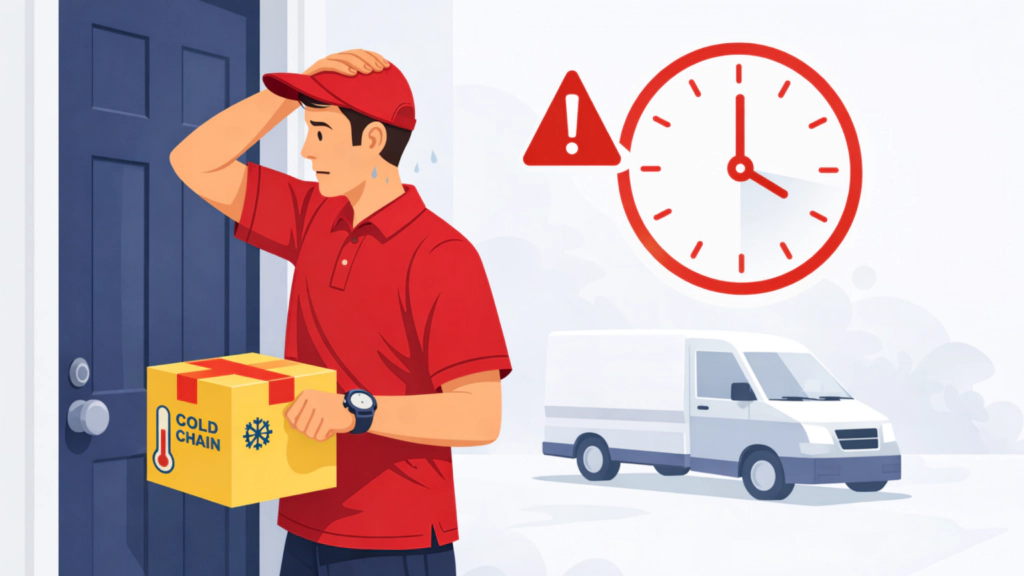
Your medication costs more than your car. It needs to be kept cold. And in a few days, a courier is going to leave it at your front door, sometimes in summer heat or winter snow. If you’ve ever stared at the tracking page wondering whether your $8,000 IVIG dose is sitting on a hot porch, you’re asking exactly the right question.
Specialty pharmacy delivery is genuinely a logistics problem. Most retail pharmacy medications survive room temperature with no fuss. Specialty drugs — biologics, factor concentrates, IVIG, certain insulins, gene therapies — require strict temperature control from the moment they leave the manufacturer until the moment they enter your body. The infrastructure that keeps that intact is called the cold chain, and it’s one of the most engineered parts of modern pharmacy.
This article opens the box, literally and figuratively. We’ll walk through how specialty medications get to your door, what’s protecting them along the way, what to do if something looks off when your shipment arrives, and what happens behind the scenes when something does go wrong.
| Worried about how your specialty medication will get to you? Every shipment we send is tracked, temperature-monitored, and signed for at delivery. Talk to us about how we’d handle yours. ▶ Call (949) 555-0100 · Get Started |
The Cold Chain: What It Means and Why It Matters
Most specialty medications need to stay within a narrow temperature range — typically 36 to 46°F (2 to 8°C), refrigerator territory. Going outside that window for too long can cause biologic medications to lose potency, denature, or in worst cases, become unsafe.
“For too long” is the key phrase. A few minutes at room temperature won’t ruin most products. Several hours might. A full day in a hot car often will. The exact tolerance varies by medication and is documented in the manufacturer’s stability data, which determines how the product can be shipped and stored.
The cold chain refers to the unbroken sequence of temperature-controlled environments your medication moves through:
- Manufacturer to specialty pharmacy. Refrigerated trucks or temperature-controlled air freight, with continuous monitoring.
- Specialty pharmacy storage. Validated, monitored pharmacy refrigerators with backup power and 24/7 alarm systems.
- Pharmacy packaging. Insulated shipper boxes packed with the right number of gel packs (or dry ice for some products) calibrated for the season and the destination.
- Carrier transit. Same-day, next-day, or two-day shipping via FedEx, UPS, or specialty couriers, often through climate-controlled hubs.
- Your door. Signature required, with you (or someone you’ve authorized) confirming receipt.
- Your refrigerator. Where the chain ends until you draw it up for use.
The whole sequence is engineered to keep your medication within range from manufacturer to vein.
What’s Actually Inside Your Shipping Box
If you’ve never opened a specialty pharmacy shipment, here’s what’s typically packed in there:
- An outer corrugated cardboard box with a shipping label and instructions on the outside
- An insulated inner shipper (often a foam-walled box or a vacuum-paneled cooler) that maintains internal temperature for 48 to 96+ hours
- Gel packs (refrigerated for 36-46°F products) or dry ice (for frozen products) packed around the medication, never in direct contact unless the product can tolerate it
- A temperature logger or indicator on most shipments — a small device that records temperature throughout transit, or an indicator strip that changes color if the package was exposed to out-of-range temperatures
- The medication itself in its manufacturer packaging, often inside an additional protective sleeve
- A packing slip and patient information including dosing instructions, refill information, and pharmacy contact for questions
- Sometimes additional supplies (syringes, alcohol pads, sharps container, infusion pump cassettes) depending on your therapy
| 💡 About the temperature logger Many shipments include a small electronic logger or color-changing indicator. We can read the logger remotely (or you can show us the indicator) to confirm temperature integrity. This is how we know whether a package was ever exposed to out-of-range temperatures during transit, even if you’d never be able to tell by looking at the medication. |
How We Decide When and How to Ship
Shipping a specialty medication isn’t a one-size-fits-all process. Decisions we make for each shipment include:
Carrier and service level
Most temperature-sensitive products ship via overnight delivery. For especially fragile products or extreme weather destinations, we use specialty couriers like FedEx Custom Critical that maintain climate-controlled environments end-to-end. Less time-sensitive products may ship two-day if validated to maintain temperature for that duration.
Day of week
We rarely ship on Fridays for products that can’t sit over a weekend in a carrier facility. Tuesday through Thursday shipments give the maximum buffer if any transit delay occurs. Monday shipments (received from the carrier on Sunday) work for most products but require closer monitoring.
Seasonal packaging
Summer shipping uses more gel packs and tighter insulation. Winter shipping protects against freezing — many biologics are damaged by freezing as much as by overheating. Our packaging is rated for 100°F+ ambient summer transit and below-freezing winter transit, with adjustments based on destination.
Destination
A patient in San Diego receives different packaging than a patient in Phoenix in August or a patient in Minneapolis in January. We map ambient temperatures along the carrier route and pack accordingly.
Signature, Scheduling, and What “Adult Signature Required” Means
Most specialty pharmacy shipments require an adult signature on delivery. This isn’t bureaucratic. It’s a real protection:
- It prevents your medication from being left on a hot porch or in freezing temperatures
- It confirms the medication reached you and not a neighbor or porch pirate
- It triggers the start of your home refrigeration window
- It documents chain of custody for chargebacks and re-shipments if needed
If you can’t be home for the delivery window, you have several options:
- Pre-schedule a delivery window. We can request specific delivery windows from the carrier, including evening or Saturday options for many products.
- Ship to an alternate address. A neighbor’s house, your office, a family member’s home — we can ship anywhere a responsible adult can sign.
- Hold for pickup. Most carriers will hold a temperature-controlled package at a hub for limited time, usually 24-48 hours, if you can pick it up.
- Reschedule the shipment. If your travel or schedule changes, call us at least 48 hours before the planned ship date and we’ll move it.
| ⚠️ Don’t have specialty medications left without a signature Even if you have a safe porch and trustworthy neighbors, never authorize a delivery driver to leave a temperature-sensitive medication without a signature. The risk isn’t theft — it’s the medication sitting in 95°F sun for six hours before you get home. The cold packs are calibrated to keep the box internal temperature stable for transit time, not for unattended outdoor exposure. |
| Need flexibility on delivery? Evening delivery, alternate addresses, schedule changes — we work with you to make sure the package gets to you safely. ▶ Schedule Your Delivery · (949) 555-0100 |
When Something Goes Wrong
Things sometimes go wrong in shipping. The good news is that the cold chain has redundancies, and even when something does go off-script, the protocol for what to do is well-established. Common scenarios:
Your package arrives warm
If you open the box and the gel packs feel completely thawed (room temperature or warmer), or the medication feels warm to the touch, don’t use it. Call us. We’ll review the temperature logger, contact the manufacturer if needed to confirm whether the product is still safe based on the actual exposure, and ship a replacement same-day or next-day at no cost to you. Most plans cover replacement under specialty pharmacy benefits.
Your package arrives frozen
Freezing damages many biologic medications irreversibly, even though they look fine. If your medication appears to have been frozen — gel packs solid as ice, product itself feels frozen, or visible ice crystals in liquid medications — same answer. Don’t use it. Call us. We’ll arrange a replacement.
The package looks tampered with
Visible damage to the outer box, broken seals, opened components, or signs that someone else opened it — refuse the package or call us immediately if you’ve already accepted it. We’ll arrange a replacement and the carrier will investigate.
Delivery is delayed
If the carrier hasn’t delivered when expected (storm delays, hub backups, missed connections), call us as soon as you notice. We can re-route the package, request expedited handling, or — if delays compromise temperature integrity — ship a fresh package and have the original returned for analysis.
You missed the delivery
Carriers will usually attempt redelivery the next business day, with the package returning to a temperature-controlled facility overnight. After two missed delivery attempts on a refrigerated package, the carrier returns the package to us, and we may need to ship a fresh one depending on cumulative time. Call us as soon as you realize you missed the delivery so we can coordinate.
| ✓ The most important rule If anything looks off about your shipment — temperature, packaging, appearance of the medication — don’t use it without calling us first. Five minutes on the phone with a pharmacist is far cheaper than infusing a compromised product. Replacement shipments are routine and almost always covered by your insurance. We’d rather replace ten packages unnecessarily than have one patient infuse compromised medication. |
Why River’s Edge Built Delivery This Way
Specialty pharmacy delivery is a sleeper differentiator. Patients usually evaluate pharmacies on price and accreditation, but the practical experience of being a specialty pharmacy patient is shaped largely by how shipments get to your door. What we’ve built into our process:
- Continuous temperature monitoring on most shipments, with logger data uploaded to our records on receipt
- Validated packaging tested for the worst-case ambient conditions on each route, not the average
- Same-day replacement for any compromised shipment, before you have to worry about your next dose
- Flexible delivery scheduling with confirmed windows and alternate-address options
- Signature confirmation on every shipment, with no exceptions for temperature-sensitive products
- Refill calendars so you never run out, and we ship before your inventory dips low
- Travel coordination with shipments to vacation rentals, family addresses, or other destinations as needed
- Carrier escalation contacts for when standard tracking inquiries hit dead ends
None of this shows up in pharmacy advertisements. Patients only notice it when something goes wrong — at which point they really notice. We design for the worst day, not the average one.
| Want a specialty pharmacy that takes delivery seriously? We’ll show you exactly how your medication will be shipped, packed, monitored, and protected before your first refill. ▶ Contact River’s Edge · (949) 555-0100 |
Frequently Asked Questions
Q: How fast can a specialty pharmacy ship?
Most refrigerated specialty medications ship overnight (next-business-day delivery) once we receive the order. For urgent situations, same-day couriers can deliver within hours in major metro areas. Most patients receive their medication within 1-2 business days from the time we have all needed approvals and information.
Q: Do I have to be home for the delivery?
An adult signature is required for almost all temperature-sensitive specialty medications. You don’t have to be the one signing — any responsible adult at the address can sign, including spouses, family members, or housekeepers if they’re at home during the delivery window. You can also ship to an alternate address (workplace, family member’s home) if signature at home is impractical.
Q: What happens if my package is delayed?
Modern shipping carriers experience delays occasionally, especially during weather events or holiday surges. If your package is delayed, call us. We can track it more thoroughly than the public-facing tracker shows, request expedited handling from the carrier, or ship a fresh package if temperature integrity is at risk. We never charge for replacement shipments due to carrier delays.
Q: Why does my insulin or biologic ship overnight when other medications don’t?
Standard medications are stable at room temperature. Refrigerated biologics and certain insulins are not — they have a limited window outside their required temperature range before potency suffers. Overnight shipping minimizes that exposure window and is the standard for temperature-sensitive specialty products.
Q: Can I refuse a specialty drug delivery if something looks wrong?
Yes, and you should. If the package is damaged, leaking, opened, or the carrier seems unfamiliar with handling specialty deliveries, you can refuse the package at the door. Call us immediately and we’ll coordinate a replacement. You won’t be billed for a refused or damaged shipment.
Q: What do I do with the cold packs and packaging?
Most insulated shippers and gel packs are recyclable through specific programs. Some specialty pharmacies offer take-back programs for the foam shippers (we do — call to coordinate). Cardboard outer boxes recycle through standard curbside recycling. Gel packs can be reused, donated, or thrown away (cut open and pour gel down the drain, recycle the plastic). The temperature logger, if any, can be returned to us in the same envelope it arrived in.
| 💡 Schema markup note for developers FAQPage schema for the 6 Q&As. HowTo schema for the “what to do when something goes wrong” section, with each scenario as a HowToStep. Author Person schema with credential PharmD. BreadcrumbList for navigation hierarchy. |
The Takeaway
Specialty pharmacy delivery is a logistics challenge that the patient is supposed to never notice. Insulated boxes, gel packs, temperature loggers, validated routes, signed receipts, and same-day replacement protocols all exist to make your medication arrive intact, on time, every time, regardless of season or distance.
When delivery works invisibly, you forget it’s complicated. When something goes wrong, the difference between a great specialty pharmacy and a mediocre one becomes very clear, very fast. The right pharmacy has already planned for the worst case before you ever notice. That’s the system. And the goal is for you to never have to think about it.