



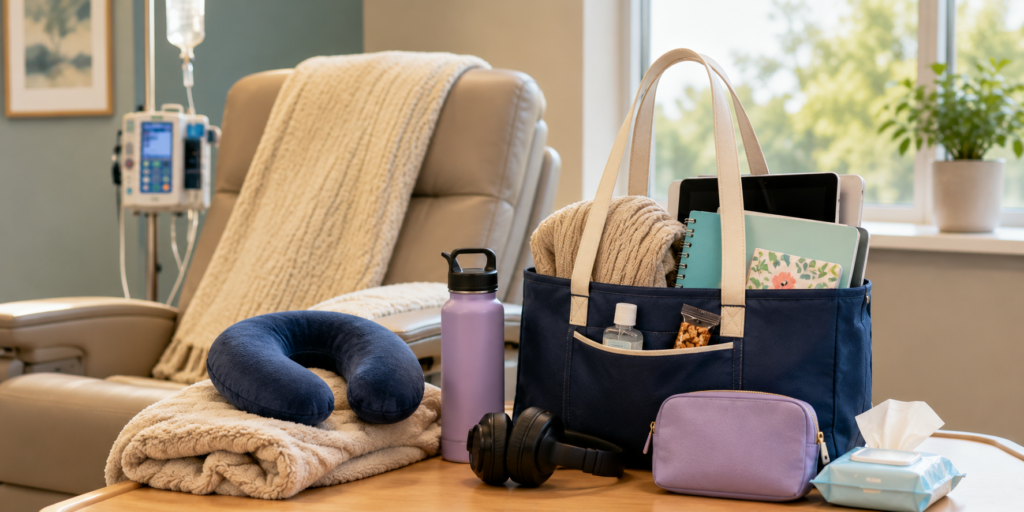
Whether it’s your first infusion or your fiftieth, you’ll spend somewhere between two and six hours in a chair with an IV in your arm. That’s a long time to wish you’d brought a phone charger. The right bag turns infusion day from “something to get through” into “a few quiet hours to read, watch, nap, or work, with a snack within reach.”
This is the packing list our team has built up after watching thousands of patients figure out what works. Pack like you’re going to a long flight, not a hospital. Most of what you’ll want is comfort, not gear.
The Essentials (Don’t Leave Without These)
- Photo ID and insurance card. Required at check-in even if you’ve been there before. Keep them in the same pocket every time so you’re not digging.
- A list of your current medications. Including doses and the time you took them today. Many infusion centers ask. A note in your phone is fine.
- Phone charger or portable battery. Outlets are usually available but not always reachable from your chair. A six-foot cable beats a three-foot cable.
- Water bottle. Hydration before, during, and after infusion makes a real clinical difference. We give you water at the center, but having your own makes it easier to keep sipping.
- A light snack. Especially if your infusion is longer than two hours or runs through a meal time. More on this below.
Comfort Items (The Real Game-Changers)
This is where most patients underpack on their first visit and then bring the right setup forever after.
- A soft blanket or oversized cardigan. Infusion rooms run cold by design — temperature control helps with both medication storage and patient symptoms. Many of our patients keep a designated infusion blanket in the car.
- Headphones (especially noise-canceling). Even a calm infusion suite has IV pump beeps, conversations, and clinical activity. Headphones turn the room into your room.
- Layers. A short-sleeve top under a zip-up hoodie or button-down lets the nurse access your arm without you needing to undress. More on the wardrobe below.
- A small pillow or neck support. If you tend to nap, your seat back may not give you the support you’d want for two-plus hours.
- Hand cream or lip balm. Infusion centers are dry, and so is most pre-infusion fasting (if your protocol requires it).
Things to Pass the Time
Two-to-six hours is enough time for most movies, several podcast episodes, half a novel, or a serious dent in your inbox. Bring more than you think you’ll need — patients often tell us their plans for catching up on work fall apart 90 minutes in, and they wish they’d packed something easier.
- A book or e-reader. Easier on the eyes than a phone for long stretches.
- A tablet with downloaded shows. Don’t rely on the center’s Wi-Fi for streaming — bandwidth varies.
- Crossword, Sudoku, or coloring book. Hand-and-eye distractions work well when you don’t feel like reading.
- A podcast lineup. Audio-only entertainment works around premedication drowsiness.
- Knitting, embroidery, or another craft. If you can do it one-handed (the IV arm tends to stay still), it’s perfect for infusion time. Skip anything that requires sharp tools — those rules vary by center.
| 💡 Heads up about premedication If your infusion includes Benadryl or another antihistamine premedication, expect to feel drowsy. Many patients plan to read or work and end up sleeping through most of the infusion. That’s fine. Bring something for if you’re awake; don’t fight the nap if your body wants it. |
What to Wear
This one matters more than people expect. The wrong outfit can turn an easy infusion into an uncomfortable one.
- Loose-fitting top with easy arm access. Short sleeves or roll-up sleeves are ideal. If you have a port, button-up shirts and V-necks make port access easy.
- Comfortable layers. Easy to add or remove without dislodging your IV.
- Pants with pockets. Useful for phone, ID, and tissues. Drawstring or elastic waistbands beat tight jeans for a long sit.
- Slip-on shoes. If you’ll need to use the bathroom mid-infusion, you’ll appreciate not having to tie laces.
- Avoid: tight sleeves, scratchy fabrics, anything you’d hate to spill on. Saline drips happen.
| Headed to your first infusion at River’s Edge? Our Irvine and Beverly Hills centers offer warm blankets, snacks, Wi-Fi, and quiet rooms. We’ll take care of the rest. Just bring yourself. ▶ Call (949) 555-0100 · Schedule Your Visit |
Food and Drink
Before the infusion
Unless your specific protocol says otherwise, eat a normal meal before you come in. Hydrate well — the day before and the morning of. Dehydration makes IV access harder and infusion side effects more likely. A typical breakfast plus 16 ounces of water two hours before your appointment is a good baseline.
During the infusion
Most centers allow snacks. Easy options patients consistently like:
- Crackers, pretzels, or a granola bar (low-mess, no refrigeration)
- Fruit (banana, apple, grapes)
- A sandwich for longer infusions
- Mints or hard candy if your medication causes a metallic taste
Skip anything aromatic — your neighbors will thank you. Skip alcohol entirely. Caffeine is fine for most patients but can intensify some side effects (especially with steroids); ask your team if you’re unsure.
After the infusion
Plan an easy meal at home. Many patients feel mildly fatigued or off after an infusion and don’t want to cook. Having something simple ready (or planning takeout) is a small kindness to your future self.
What You DON’T Need to Bring
- Your medication. The infusion center has it. We’ve shipped it directly to them.
- Medical records. They have those too. Your prescriber’s office has shared everything they need.
- A change of clothes. You’ll be fine in what you wore.
- A whole day of work. You’ll have time, but premedication and infusion fatigue make focused work harder than you’d think.
- Pain medication “just in case.” If you need pain relief during infusion, your nurse will provide it. Pre-treating with NSAIDs or other meds can interact with infusion protocols — ask your prescriber, don’t self-treat.
Bringing a Companion
Most infusion centers allow one companion in the infusion suite, especially for first appointments. Whether to bring someone is personal:
- First infusion? Bringing a friend, partner, or adult child is often grounding. They can take notes, remember what the nurse said, and drive you home if premedication makes that wise.
- Routine maintenance? Most patients eventually go solo. The chair next to you is often filled by someone you’ll see again next month.
- Need transportation either way? Some centers have rideshare partnerships or arrange transportation. Ask before you assume you need a driver.
One Last Thing
Bring patience for yourself. Even a smooth infusion is a long time in a chair while medication drips into your body. Your job for the next several hours is to be still and let your team do their job. Snacks, headphones, a soft blanket, and something to read or watch are how patients tell us they get through it. Most people emerge from their first infusion saying it was much easier than they’d feared.
Quick Questions
Q: Can I bring my own pillow or blanket?
Yes, almost every infusion center allows it. Many of our regulars bring a designated “infusion blanket” they keep just for this. The center has blankets too, but yours from home is yours.
Q: Can I work during my infusion?
If you don’t have premedication that causes drowsiness, yes. Many patients take calls, answer emails, and work productively for an hour or two before fatigue sets in. Just be prepared for the possibility that your second hour is less productive than your first.
Q: Should I bring a pain reliever for my IV insertion?
Talk to your team first. Some over-the-counter pain relievers can interact with infusion protocols. If IV insertion is consistently uncomfortable for you, ask about topical numbing options at your next visit.
Q: Can I bring my dog or service animal?
Service animals are typically welcome at infusion centers under the ADA. Comfort animals or pets generally are not allowed in clinical settings due to infection control. Ask your specific center for their policy.
Q: What if I forget something?
Almost every infusion center has emergency basics — water, blankets, sometimes snacks, often a phone charger to borrow. Forgetting something is not a crisis. The next visit, you’ll have a packing list that works for you.
| 💡 Schema markup note for developers ItemList schema for the main packing checklist (high rich-result eligibility for ‘what to pack’ queries). FAQPage schema for the Quick Questions section. Author Person schema with credential PharmD. Add HowTo schema as an alternative on the food and drink section if rich-result testing favors it. |
The Takeaway
A good infusion bag has comfort, distraction, and just enough preparation to handle anything unexpected. The essentials are an ID, a charger, water, a snack, and something soft to layer up. Everything else is personal — what gets you through hours in a chair when you’d rather be anywhere else.
Pack once, refine after your first visit, and after that infusion day becomes a manageable rhythm. Bring yourself, bring your bag, and let your team handle everything that matters clinically. That’s the deal.